While tech giants like Google, Amazon, and Apple dominate the smart home market with closed ecosystems, an open-source alternative is quietly building momentum.
As a big fan of home automation since the X10 days, I've been using and following the rise of Home Assistant, the DIY smart home platform for a long time.
This year, something big happened.
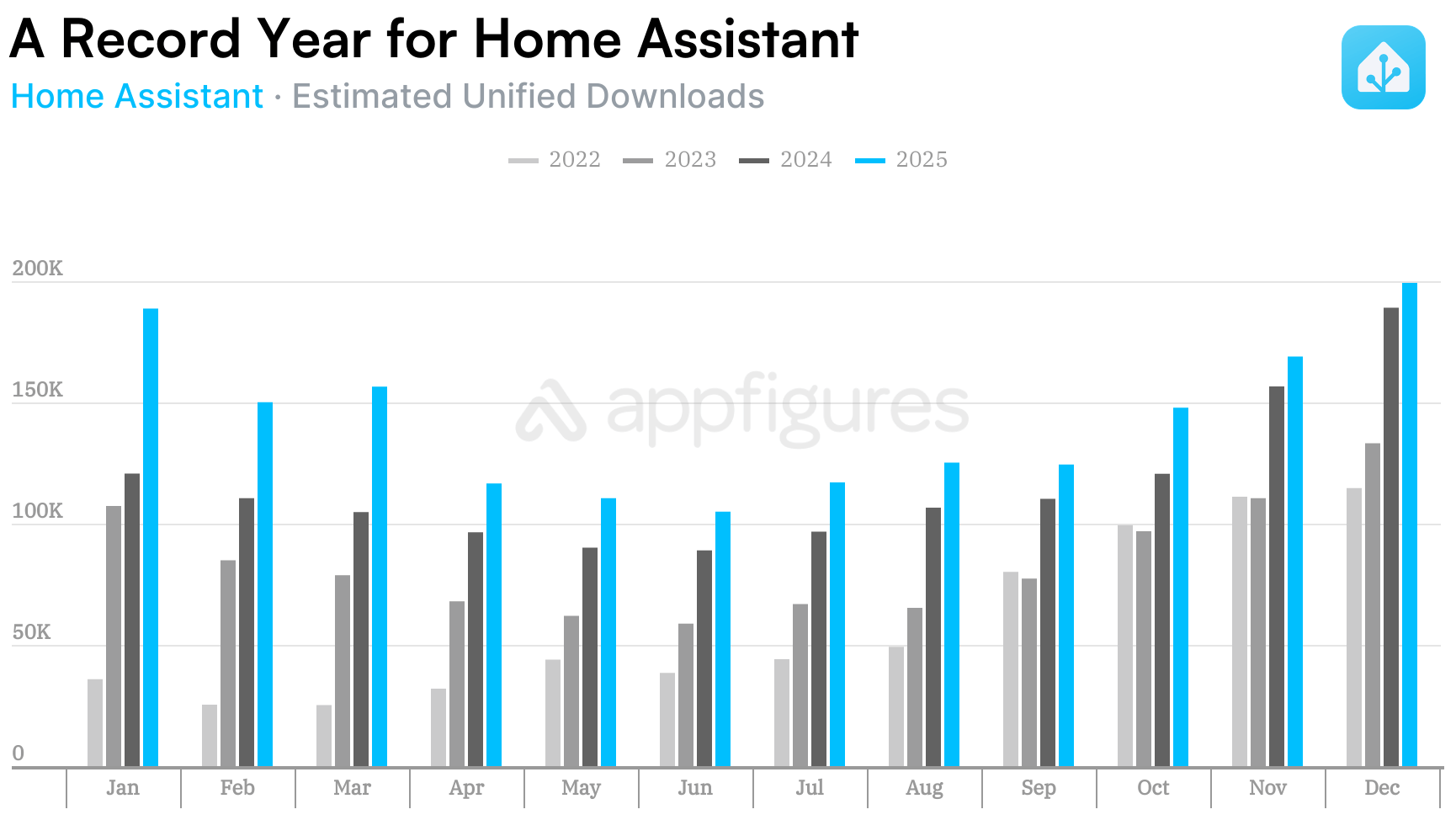
According to Appfigures Intelligence, Home Assistant's mobile app is projected to reach 1.7M downloads in 2025. That growth is particularly notable given the app's more technical nature and the fact that it requires users to set up and maintain their own smart home server.
But what's more important is where the growth is coming from.
Where Growth Is Happening
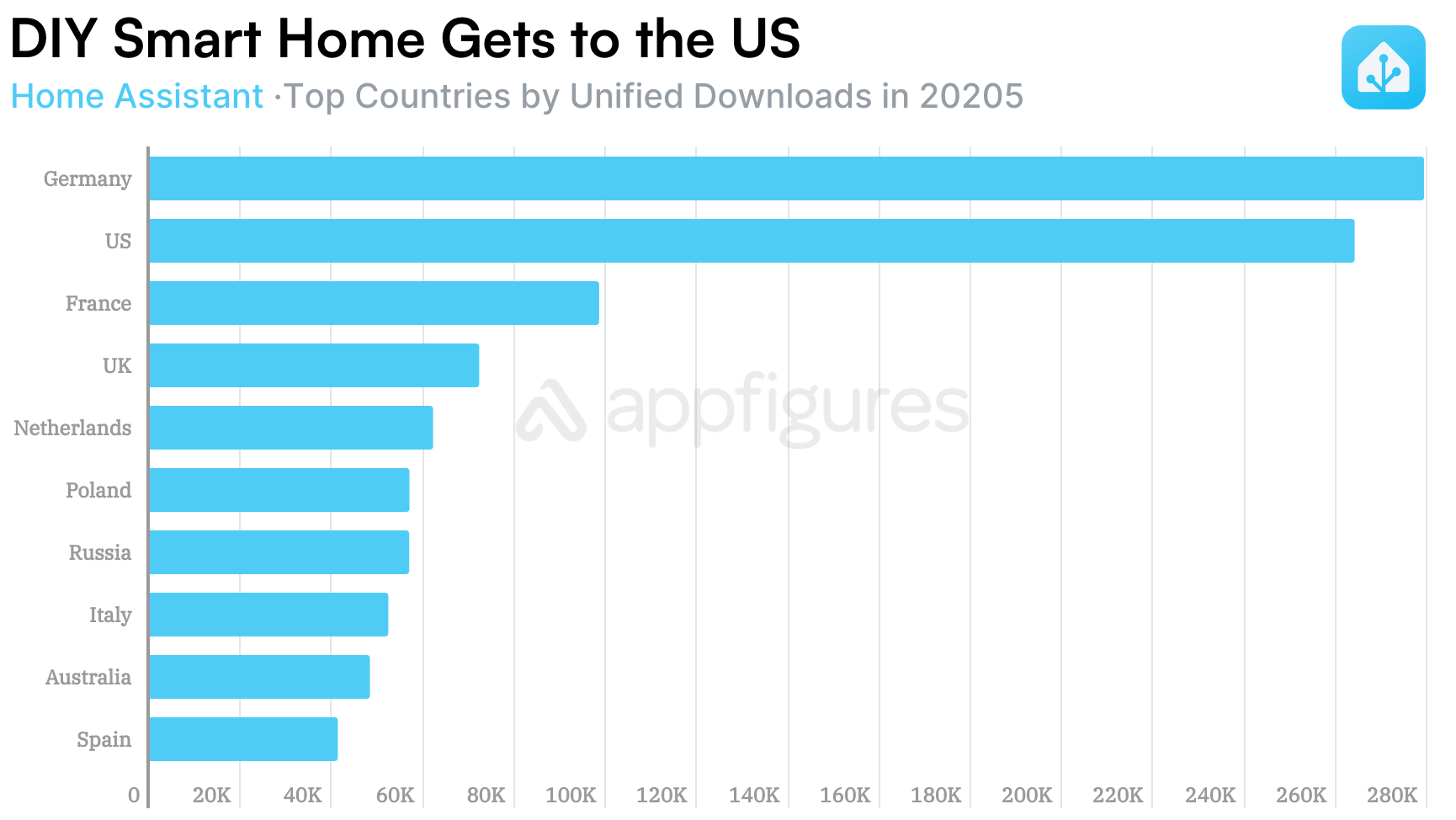
Germany has been Home Assistant's biggest market for a while, and while Germany remained the app's biggest market with 279K estimated downloads in 2025, the real story is the US!
Our estimates show US downloads of Home Assistant surged 54% in 2025 to 264K, making it Home Assistant's second-largest market and its fastest-growing developed market globally.
The US surge is significant because the US has the highest smart home market penetration globally. Americans already own millions of smart devices, from Ring doorbells and Philips Hue lights, to Nest thermostats and a variety of smart plugs, but those devices are often siloed in separate apps with limited automation capabilities.
Home Assistant solves that by letting users connect everything into a single, locally-controlled system with a powerful automation engine.
The fact that US adoption is accelerating suggests the app is becoming more user-friendly and that mainstream users are getting more comfortable with DIY alternatives to brand-locked/cloud ecosystems.
Why Now?
Two factors are driving Home Assistant's growth:
What This Means
Home Assistant's growth shows that even in categories dominated by tech giants, there's room for open alternatives that prioritize user control. As smart home adoption continues to expand and users accumulate more devices across incompatible ecosystems, the demand for a unified, user-owned solution will only grow.
May’s top app charts were mostly stuck, but ChatGPT kept growing in downloads while TikTok kept leading revenue and Google One climbed into the top five.
Apple's WWDC 2026 app song named a tiny slice of the App Store, but the apps behind the lyrics are far bigger, older, and more successful than average.